
Course design involves thoughtful planning, structured design, and continuous refinement to ensure that the course meets educational goals and provides meaningful learning experiences for students. In addition, course design for adult learners presents unique challenges and opportunities. Understanding how to apply effective instructional design principles can greatly enhance the learning experience and outcomes for adult students in higher education. Universal design for learning (UDL) and accessible design, ensuring that courses are inclusive and accessible to all learners, are also integral to effective course design.
The sections below provide an overview of:
- fundamental concepts of course design, focusing on backward design
- the use of assessments as evidence, and alignment with learning outcomes
- collaboration with instructional designers
- re-assessment of your course and redevelopment as necessary
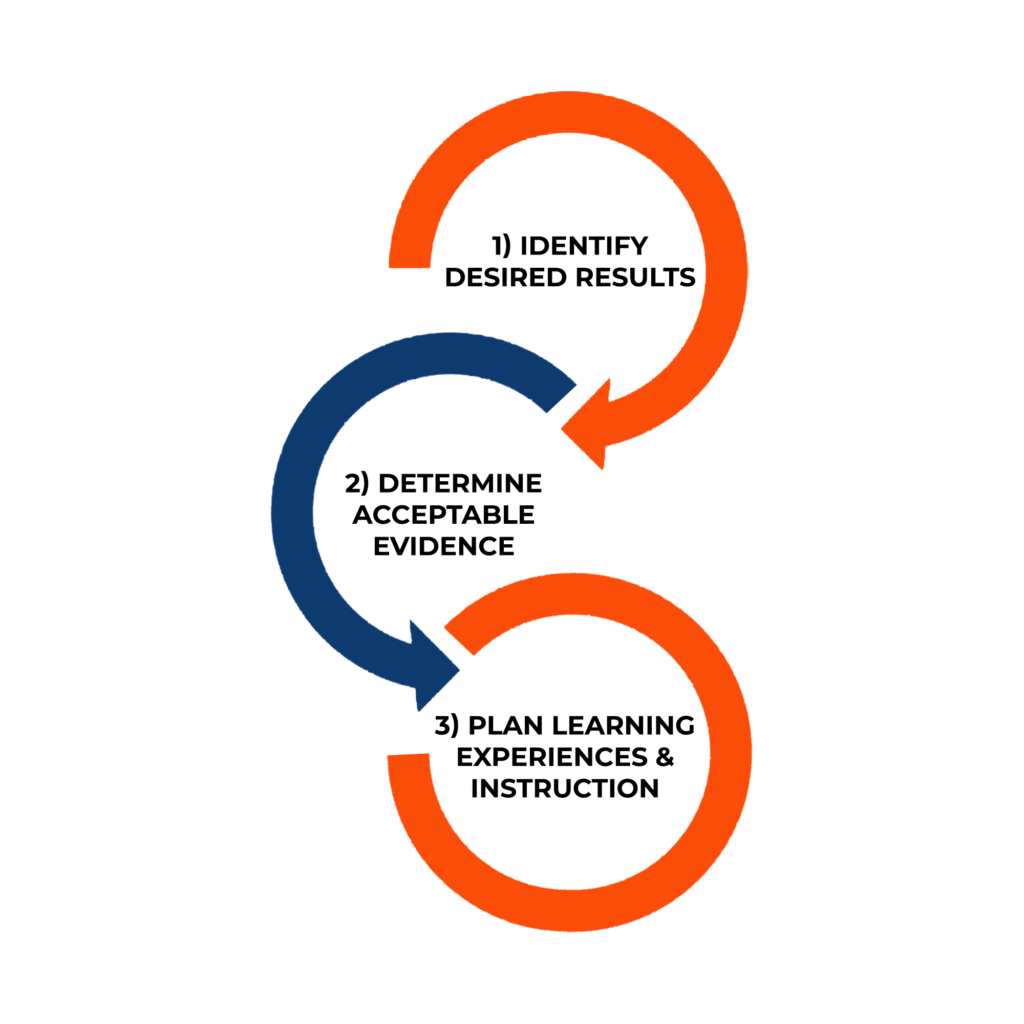
Backward design is a strategic approach to course planning that begins with the end in mind. Rather than starting with lectures or assignments, instructors first identify the desired learning outcomes and then work backward to develop the curriculum. This method ensures that every component of the course is aligned with the overall educational goals.
The backward design process involves three main steps:
- Identify Desired Results: Define what students should know, understand, and be able to do by the end of the course.
- Determine Acceptable Evidence: Decide how you will assess students’ learning and what evidence will demonstrate their achievement of the desired results.
- Plan Learning Experiences and Instruction: Design activities, lessons, and resources that will guide students toward achieving the learning outcomes.
Step 1: Identify Desired Results
Begin by focusing on defining clear, measurable learning outcomes that students should achieve by the end of a course. Pinpoint core concepts, skills, and knowledge that are essential for student success in your discipline and articulate them as student outcomes that align with academic standards and institutional expectations. By establishing these desired results upfront, you will create a roadmap for the entire course, ensuring that all subsequent planning, teaching, and assessment activities are purposefully directed towards achieving these outcomes. This stage is critical as it sets the foundation for a coherent and focused course, enhancing student learning and engagement.
Step 2: Determine Acceptable Evidence
The learning outcomes you identify should be SMART: specific, measurable, achievable, relevant, and time-bound.
- Specific means the goal is well-defined and unambiguous.
- Measurable ensures there are criteria to track progress and determine when the goal is met.
- Achievable means the goal is realistic and attainable within available resources and constraints.
- Relevant ensures the outcome aligns with broader program/institutional objectives and has a meaningful impact.
- Time-bound sets a clear deadline for achieving the outcome, which helps prioritize efforts.
Your identified outcomes should then be aligned with acceptable evidence. Whenever possible, your SMART outcomes should include an action plan with milestones to achieve your overall outcomes, rubrics and identified responsibilities for each of constituencies involved. Planning for each of these areas will assist you later as you design the activities that will be a part of your course.
Generally, assessments fall into one of two categories:
- Formative Assessments are an evaluative process to monitor student learning and provide ongoing feedback that can be used to improve instruction and student performance. The primary purpose of formative assessment is to identify areas where students are struggling, adjust teaching strategies, and support students in achieving the learning course learning outcomes. Examples include ungraded quizzes, reflections, and peer reviews.
- Summative Assessments are administered at the end of a learning unit or course to evaluate overall student learning. Generally, they result in a final grade or score of student performance. The primary purpose of summative assessment is to provide a summary of student learning, inform instructional decisions, and evaluate the effectiveness of the educational program. Examples include final exams, projects, and presentations.
Step 3: Plan Learning Experiences and Instruction
This step involves the design of activities, lessons, and resources that will guide students toward achieving the learning outcomes. Your action plan, developed along with your SMART outcomes, will help you identify the activities that will scaffold student learning as they work towards your desired outcomes. It is a best practice to consider including a variety of options for accessing and completing these tasks, such as including video or audio files for learning content material, as well as reading assignments.
Content Delivery: Multiple Means of Engagement
Inclusive educational environments accommodate diverse learning needs. The principles of the Universal Design for Learning (UDL) framework advocate for multiple means of engagement, representation, and action/expression. Design activities that offer varied ways for students to participate and stay motivated, such as collaborative projects, individual assignments, and technology-enhanced interactions. Consider presenting information through different formats—text, audio, video, and hands-on experiences—to cater to different learning preferences. Provide multiple options for students to demonstrate their understanding, such as essays, presentations, or creative projects, ensuring all learners can express their knowledge effectively. By incorporating UDL principles, you can create flexible and accessible learning experiences that support all students in reaching their full potential. Refer to our UDL page.
Varied Assessment Types
Different types of assessments play a crucial role in promoting metacognition among students by encouraging them to reflect on their learning processes and strategies. Formative assessments, such as quizzes, self-assessments, and peer reviews, provide immediate feedback, helping students identify their strengths and areas for improvement. Summative assessments, like exams and final projects, encourage students to synthesize and apply their knowledge, fostering deeper understanding and self-awareness. Reflective assessments, including journals and portfolios, require students to analyze their learning experiences, set goals, and develop strategies for future tasks. By engaging in various assessment types, students become more aware of their cognitive processes, enabling them to regulate their learning, make informed decisions, and develop a growth mindset, ultimately enhancing their academic performance and lifelong learning skills.
Instructor presence is a foundational element in all modalities of instruction, whether online asynchronous or synchronous, hybrid, or in-person. Its importance is amplified in online environments, where the absence of physical proximity can create a sense of isolation. “Siloing” of content or students not only impedes collaboration but can also lead to fragmented learning and a lack of connection to the course content.
In addition, maintaining Regular and Substantive Interaction (RSI) is not only a best practice, but a federal requirement for accredited online courses. RSI involves proactive, instructor-initiated engagement through instructional activities, such as giving feedback, responding to questions, holding office hours, and facilitating discussions. This distinguishes a quality online course from a self-paced correspondence course.
Understanding the differences between course modalities can guide how presence and communication are implemented. In asynchronous online courses, presence is established through timely announcements, detailed feedback, regular discussion facilitation, strategically scheduled check-ins, as well as the ability of students to respond to or interact with their instructor, such as through email. In synchronous online classes, instructor presence can be reinforced through live video sessions, real-time discussions, and immediate support available through office hours. Hybrid courses may blend elements of both, requiring thoughtful coordination of in-person and digital interactions. For fully in-person classes, presence is often assumed, but it still benefits from structured communication and digital follow-up to reinforce engagement and accessibility.
Psychological safety, the belief that one can speak up, make mistakes, and express ideas without fear of ridicule or punishment, is a cornerstone of effective learning environments. Psychological safety allows students to engage authentically, take intellectual risks, and persist through challenges. This is especially important in asynchronous online courses, where isolation and miscommunication can create barriers to participation. Creating a culture of trust and respect needs to be intentionally built into your course design and instructional practices.
The value of psychological safety is well-documented in educational and organizational research. Notably, Google’s Project Aristotle, a multi-year research study aimed at identifying what makes teams effective, found that psychological safety was the most important factor in successful team performance. Teams that felt safe to take risks, admit errors, and offer new ideas were more productive, more innovative, and more cohesive.
Similarly, psychological safety is deeply connected to education because it underpins students’ willingness to participate, take risks, and engage meaningfully with learning. Inclusive design strategies, like flexible assignment formats, learner choice, and opportunities for peer collaboration, help ensure that all students can engage in ways that align with their needs and identities. Grounded in Universal Design for Learning (UDL) and adult learning principles, psychological safety supports not just student performance, but student well-being and resilience, key outcomes in any learning environment.
Promoting Psychological Safety in Course Design
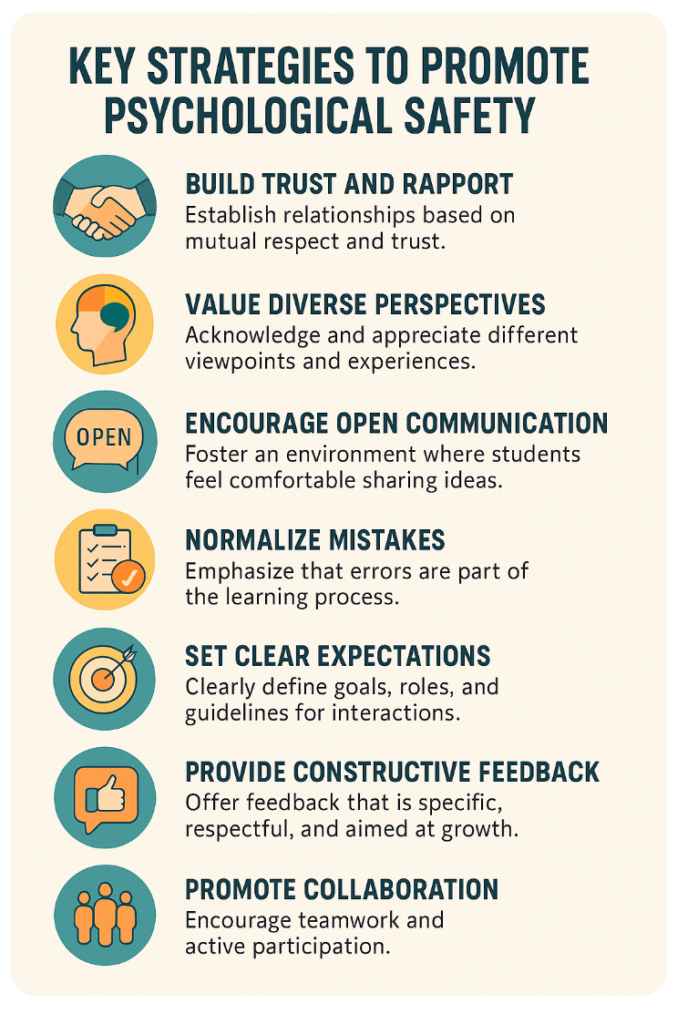
To promote psychological safety in your course, set clear expectations for respectful dialogue, especially in discussion forums and group projects. Model vulnerability by acknowledging complexity and inviting multiple perspectives. Use inclusive language and provide opportunities for anonymous feedback. Activities such as reflection journals, community agreements, and check-in surveys can create space for students to express concerns and reflect on their learning experience. Recognizing student effort and normalizing struggle further reinforces a growth-oriented classroom culture.
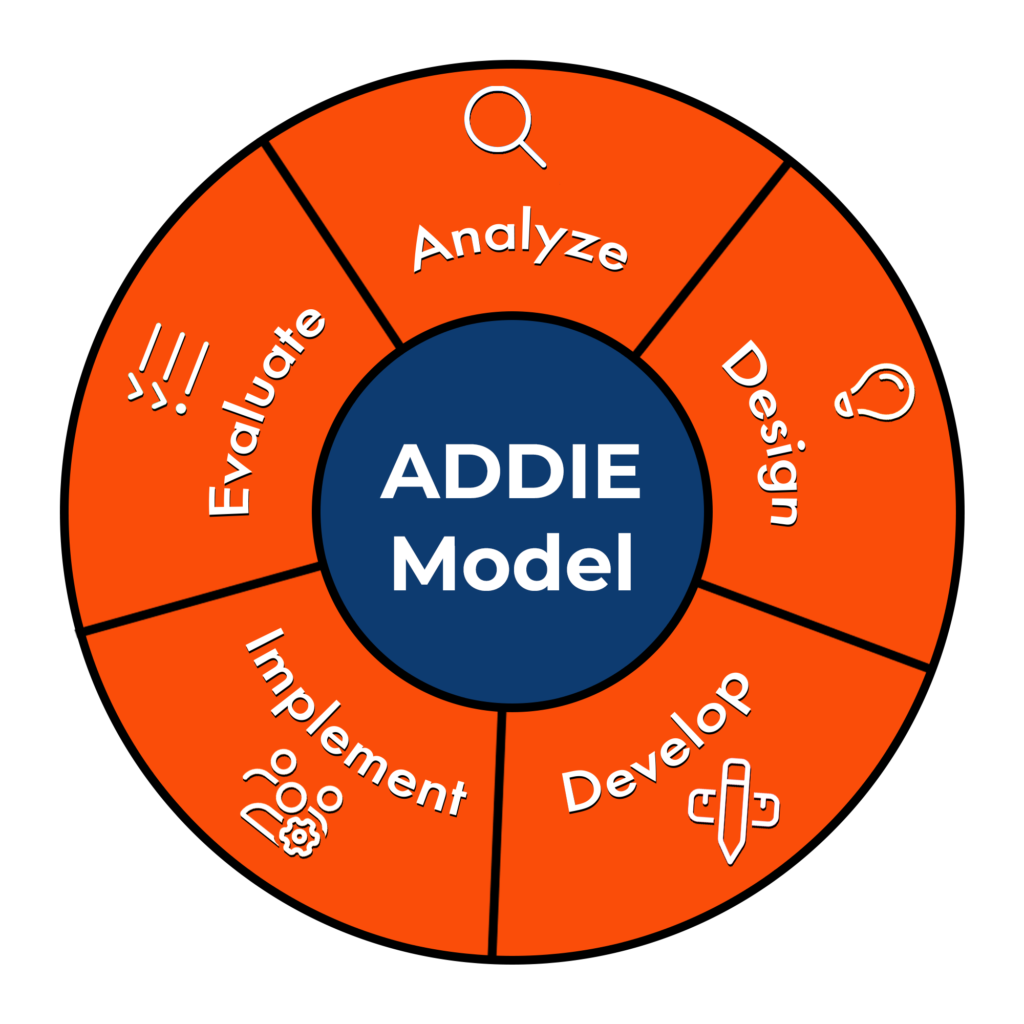
While backward design provides a powerful foundation for aligning learning outcomes, assessments, and instruction, other instructional design frameworks offer valuable perspectives and tools that can enhance course development. One of the most widely used models in instructional design is ADDIE, an acronym that stands for Analyze, Design, Develop, Implement, and Evaluate. Originally developed for military training, ADDIE has since been adapted for higher education and corporate learning environments.
The ADDIE model is systematic and iterative, guiding instructors through a structured planning process. In the Analyze phase, educators assess learner needs, goals, and the learning context. The Design phase focuses on defining learning objectives, selecting instructional strategies, and planning assessments. During Development, materials are created—such as content modules, multimedia, and assignments. In the Implementation phase, the course is delivered, often accompanied by training or orientation. Finally, Evaluation involves both formative (ongoing) and summative (final) assessment of the course’s effectiveness, with results used to inform improvements. ADDIE’s cyclical nature encourages continuous refinement based on feedback and data, making it especially effective for digital learning environments.
ADDIE can complement backward design by offering a broader project management lens. Where backward design focuses on alignment between goals, assessments, and activities, ADDIE ensures that instructional efforts are guided by data-driven decisions, supported by thoughtful development, and evaluated for improvement. Together, they offer a comprehensive approach to thoughtful, scalable course design.
Other frameworks such as SAM (Successive Approximation Model), Dick and Carey, and Rapid Prototyping also bring valuable strategies, particularly for agile development, team-based design, and multimedia-rich instruction. These models are especially useful in institutional or collaborative settings where iterative feedback and instructional technology integration are central. By understanding multiple frameworks, educators can select or blend approaches that best fit their course goals, learner needs, and institutional context.
The ARCS Model, developed by John Keller[1] is a framework specifically designed to enhance learner motivation, which is often overlooked in traditional instructional design models. ARCS stands for Attention, Relevance, Confidence, and Satisfaction, four essential components that influence whether students engage with and persist in a learning task. Keller’s model recognizes that even the best-designed instruction can fall short if learners are not motivated to participate, especially in environments where external accountability (like attendance or in-person engagement) is reduced such as online or self-paced courses.
Each component of the model plays a unique role in the learning experience. Attention focuses on capturing learners’ interest through variety, novelty, or problem-based learning. Relevance helps learners see how the material connects to their goals, prior knowledge, or real-world applications, critical in adult learning and workforce development. Confidence refers to building a learner’s belief that they can succeed, often supported by clear expectations, scaffolded tasks, and appropriate challenge levels. Finally, Satisfaction ensures learners feel a sense of achievement or reward, whether intrinsic (e.g., pride in completing a task) or extrinsic (e.g., positive feedback, badges, or grades).
The ARCS Model is especially useful in online, asynchronous, or diverse learning environments, where learner motivation is harder to observe and sustain. Instructors can integrate ARCS strategies by designing interactive elements (quizzes, simulations), relating content to learner backgrounds, offering frequent low-stakes feedback, and celebrating progress. As part of a holistic instructional design approach, ARCS complements frameworks like UDL and backward design by putting learner engagement at the center—making the learning experience not just effective, but motivating and meaningful.
[1] Keller, J. M. (2010). Motivational design for learning and performance: The ARCS model approach. New York, NY: Springer.

