MEADE Visual Repository: Assessment

This section focuses on assessment of student learning and how to use assessment results to support learning. The visuals unpack key ideas such as aligning assessments with course outcomes, formative and summative assessment, using rubrics, and “closing the assessment loop”. The description below each infographic summarizes the key ideas visualized in the graphic.
To save any image below:
- Right-click on the image and choose “Save image as…” (on a Mac with a trackpad, use two-finger click or Control-click).
- Choose the folder where you want to store it, optionally rename the file, then click Save.
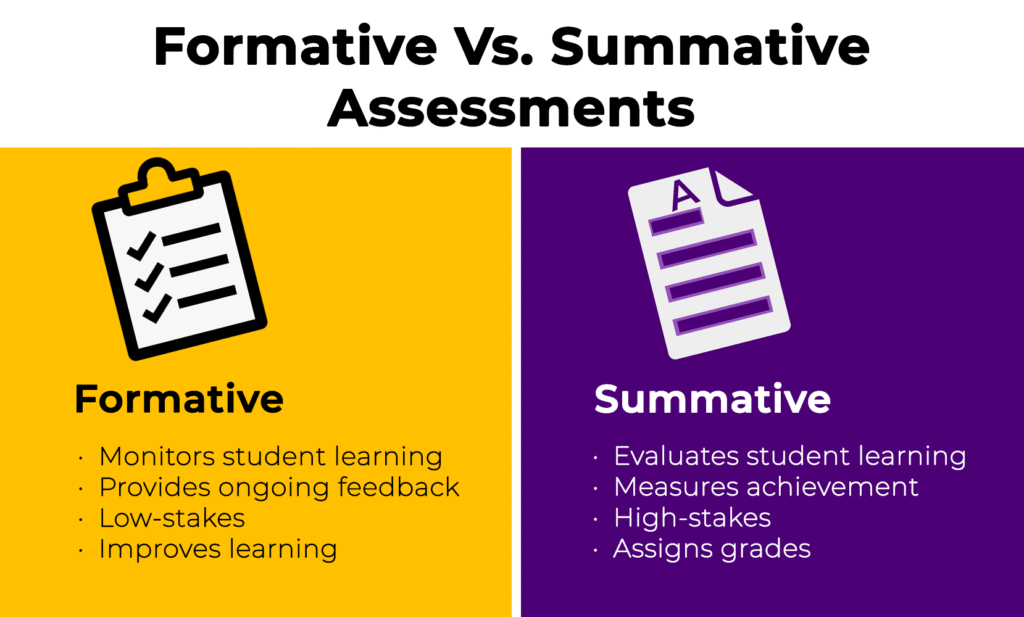
This infographic compares formative and summative assessments and helps instructors decide which type of assessment best fits in a given activity or assignment.
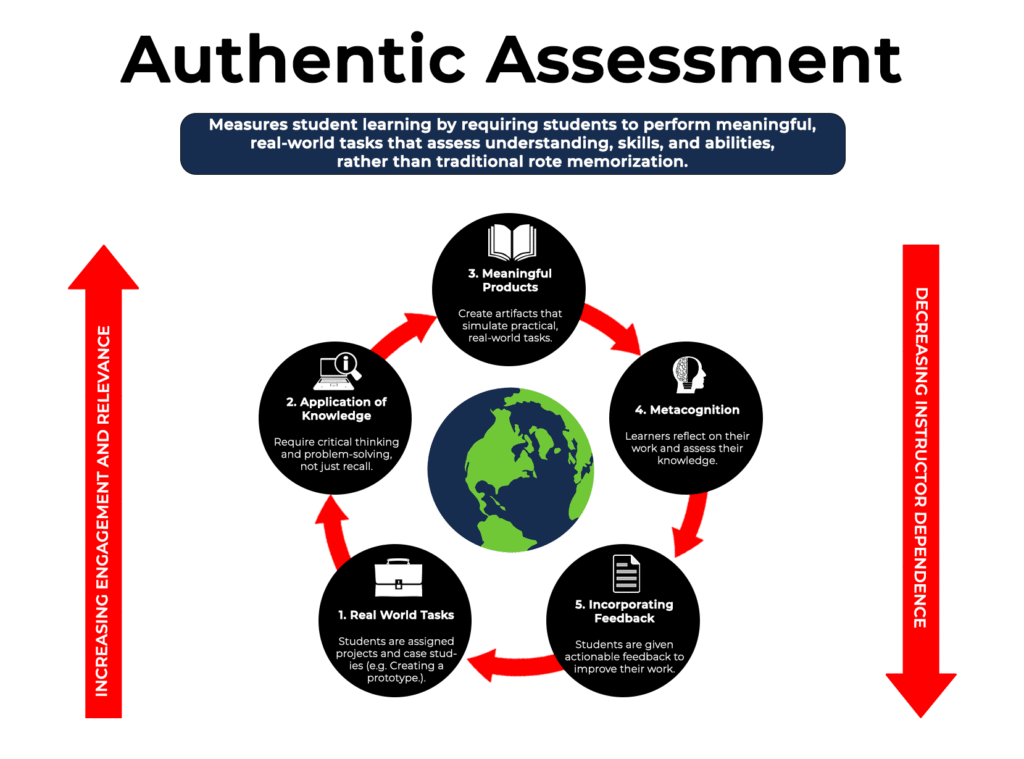
This infographic explains authentic assessment as a cycle of real-world tasks, application of knowledge, meaningful products, metacognition, and feedback.
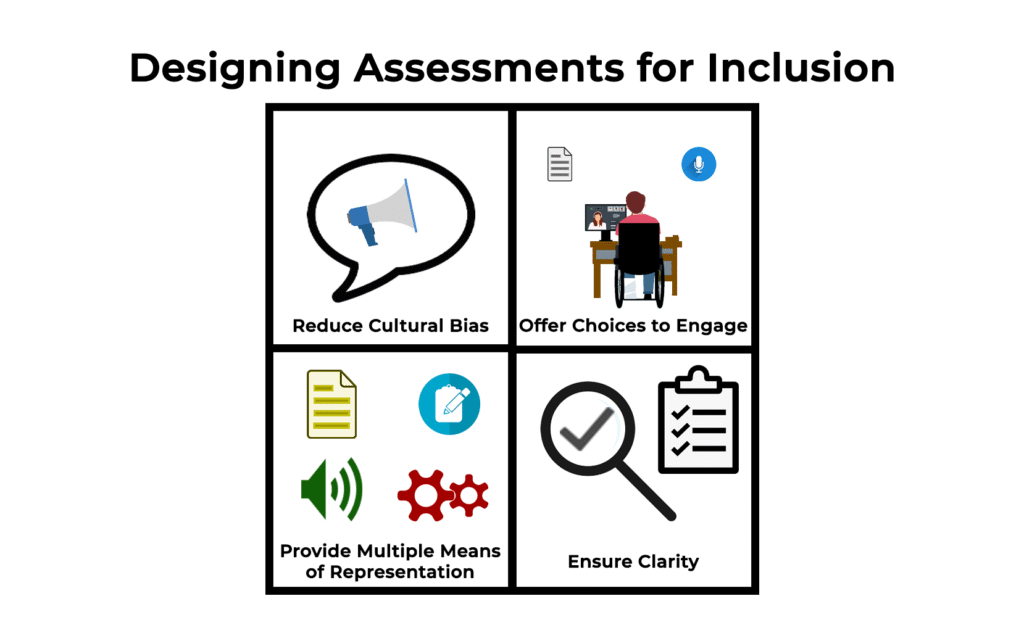
This infographic highlights four principles you can use when designing inclusive assessments.
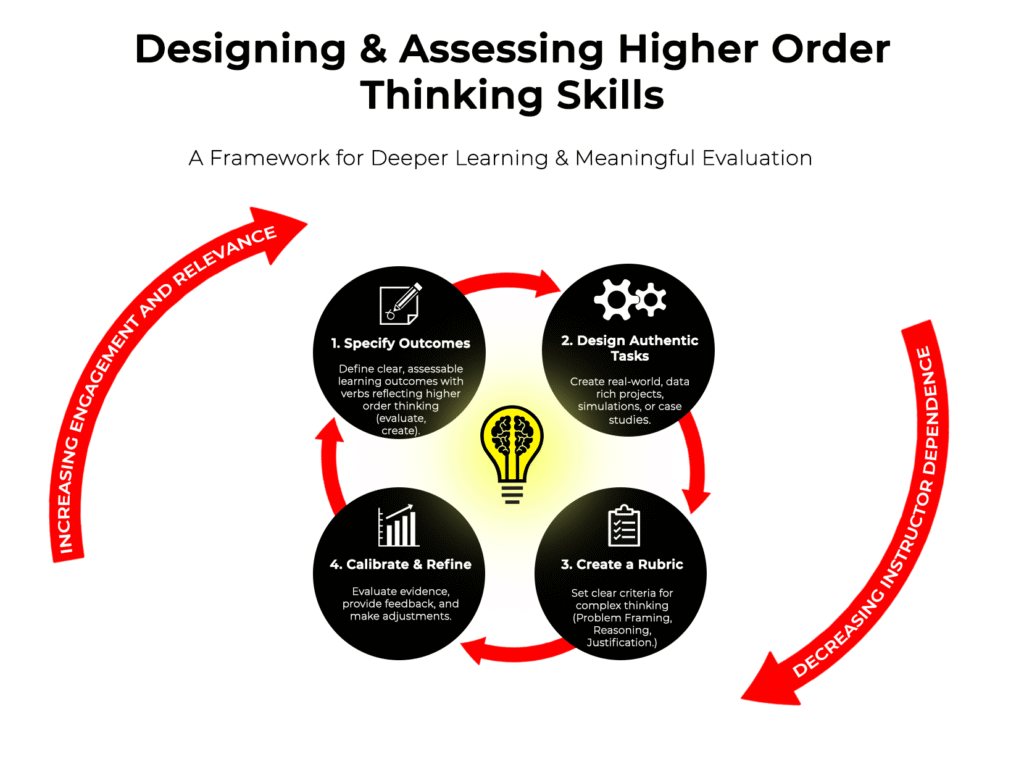
This infographic provides a framework for designing and assessing higher order thinking skills.
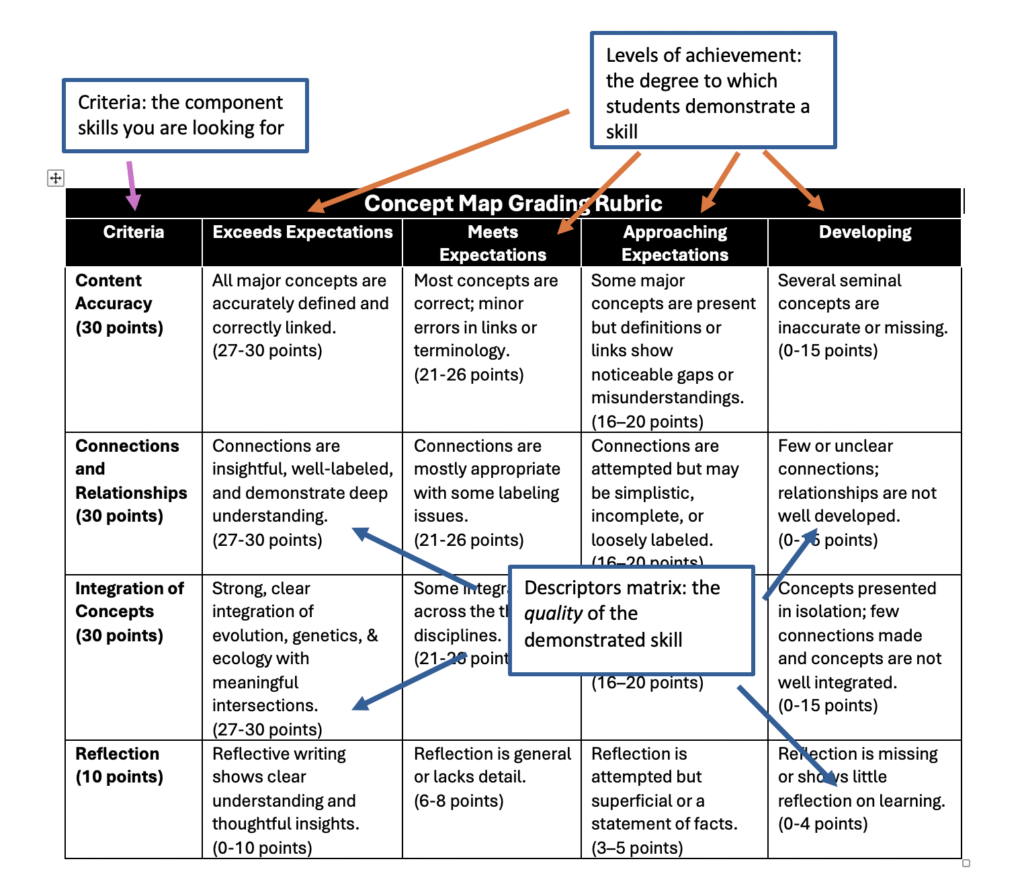
This infographic breaks down the different parts of an analytic rubric and what they do.
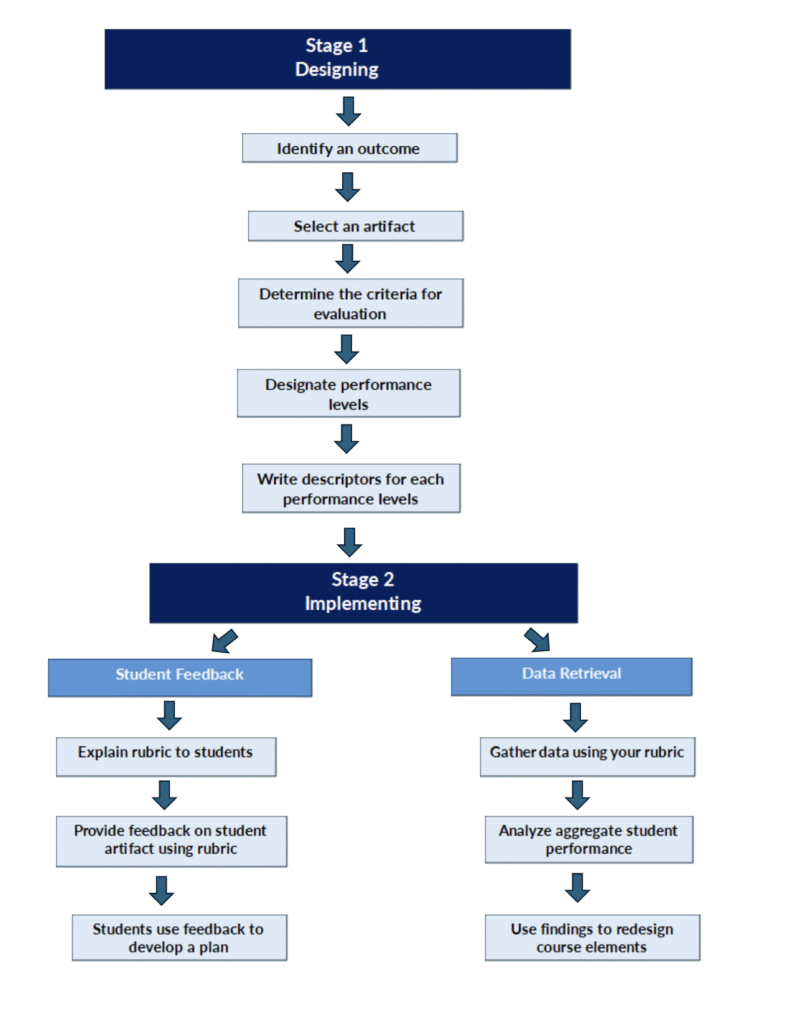
This infographic depicts the process of designing and using a rubric to provide students with feedback and gather data about student performance so that data informed decisions can be made to improve teaching and learning.
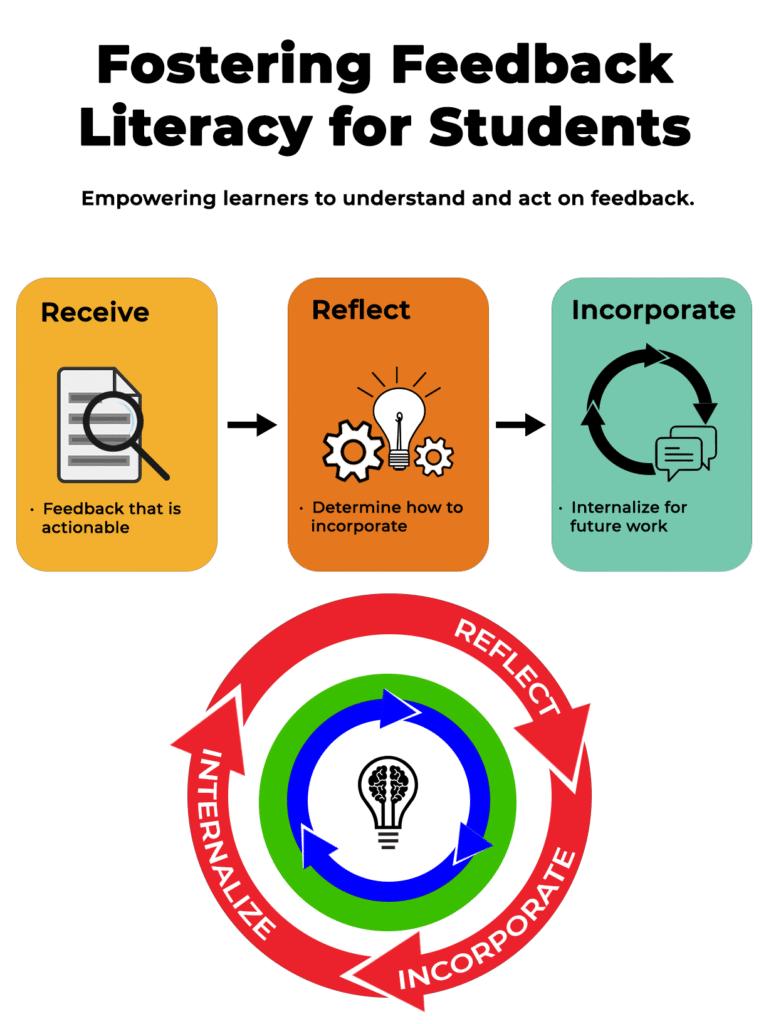
This infographic outlines a simple model to build students’ feedback literacy including students receiving actionable feedback, reflecting on what it means, and incorporating it into future work, and internalizing the process.
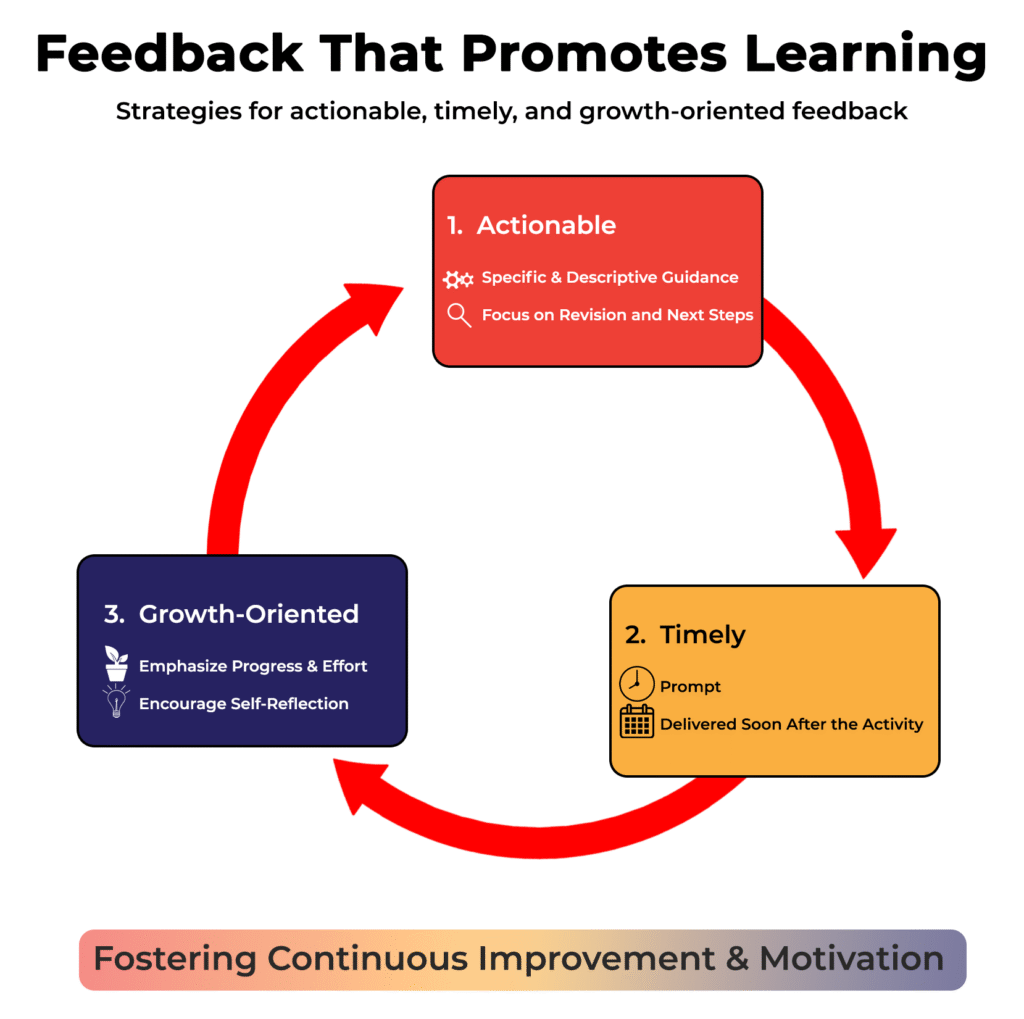
This infographic highlights three features of feedback that help students learn.
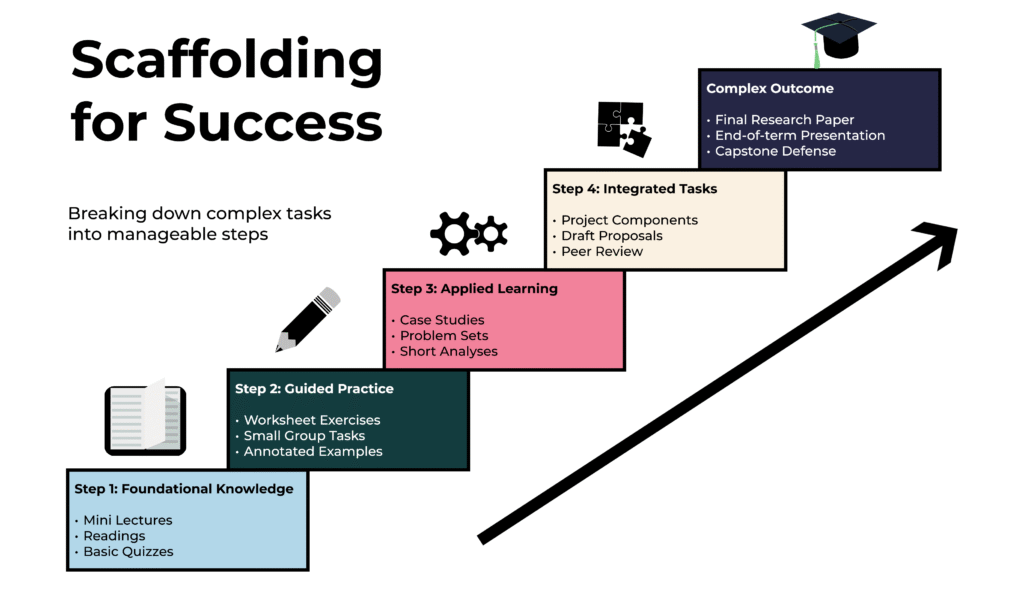
This visual shows how to scaffold a major assignment by breaking it into manageable steps to promote student success.
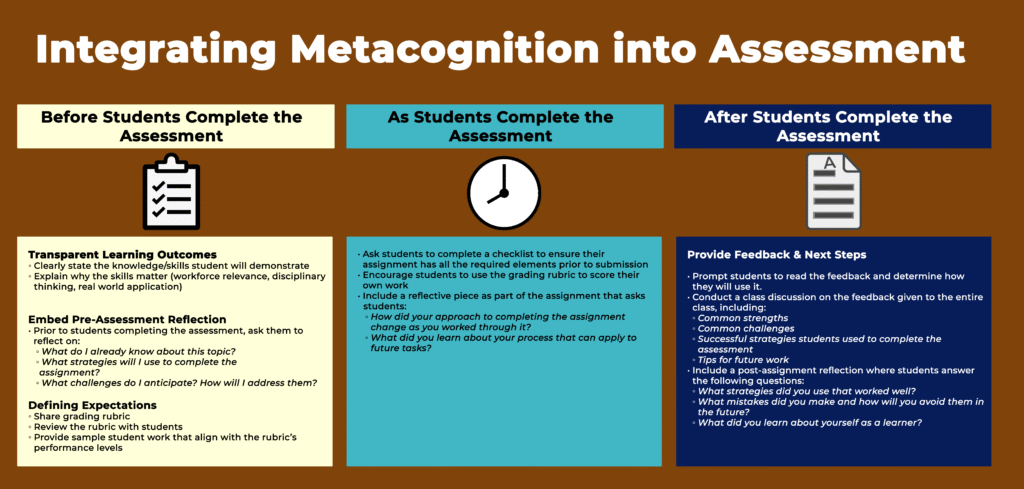
This infographic divides assignments into three parts and provides ways to include metacognition as students work through an assignment.

